He had the credibility. The show didn’t exist yet.
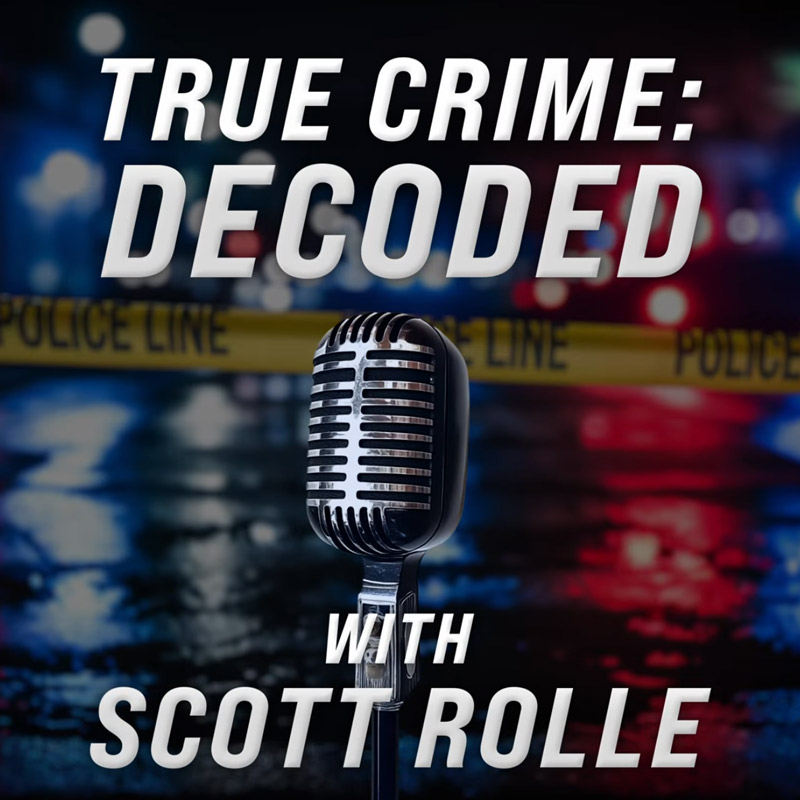
Scott Rolle is a former prosecutor, sitting judge, and co-star of the History Channel’s Brad Meltzer’s DECODED. His podcast, True Crime: DECODED, revisits infamous criminal cases and breaks them down through evidence, testimony, and courtroom strategy. Each episode features a guest who specializes in the case at hand, and Scott brings the legal lens that separates this show from most true crime coverage. What he needed was a production home that could match his level.
The specific problem was format. Scott’s show depends on guests who know individual cases in depth — former investigators, forensic experts, journalists who covered the trial. Those guests aren’t always local. Most podcast setups force a choice: bring guests in person and limit your pool, or record remotely and accept the audio and visual tradeoffs. Scott needed both at once.
A production infrastructure built for this show specifically
Purple Donut Studios developed True Crime: DECODED from the ground up. That means the show art, episode graphics, hosting and distribution, and all post-production. Every episode is produced as a structured multi-part series, with Scott recording in Studio B and his guests joining remotely via Riverside.
The technical centerpiece is a teleprompter-plus-Riverside setup that solves the remote guest problem visually. Scott uses the teleprompter to look directly at his remote guest through Riverside while staying fully on camera. The result is genuine eye contact and real conversation, captured at in-studio quality, with guests who can be anywhere in the world. Once the infrastructure was in place, the workflow became repeatable: Scott comes in with a guest and a case, we capture the conversation, and shape it into a multi-part series in post. Lindbergh. D.B. Cooper. Each case gets the same treatment.
Now he has a show
Before working with Purple Donut, Scott had the expertise and the access. What he didn’t have was a production setup that could support his format at scale. Now he does: a consistent visual identity, professional audio and video, and a distribution infrastructure he doesn’t have to manage himself. The audience has grown steadily since launch, and the format holds. Remote guests, in-studio quality, and a production rhythm that makes it possible to keep going without the overhead eating the whole project.